If you've spent any time around deliverance ministry, this is your first question — and it should be. Here's our honest, biblical answer.
When revival broke out in Ephesus, the new believers didn't hold a yard sale:
“A number who had practiced sorcery brought their scrolls together and burned them publicly. When they calculated the value of the scrolls, the total came to fifty thousand drachmas.”
Acts 19:19
They burned items worth roughly 135 years of wages. And Moses warned Israel directly about the precious metal on idols:
“The images of their gods you are to burn in the fire. Do not covet the silver and gold on them, and do not take it for yourselves, or you will be ensnared by it.”
Deuteronomy 7:25
So why would anyone melt and convert instead of simply destroying? Three reasons.
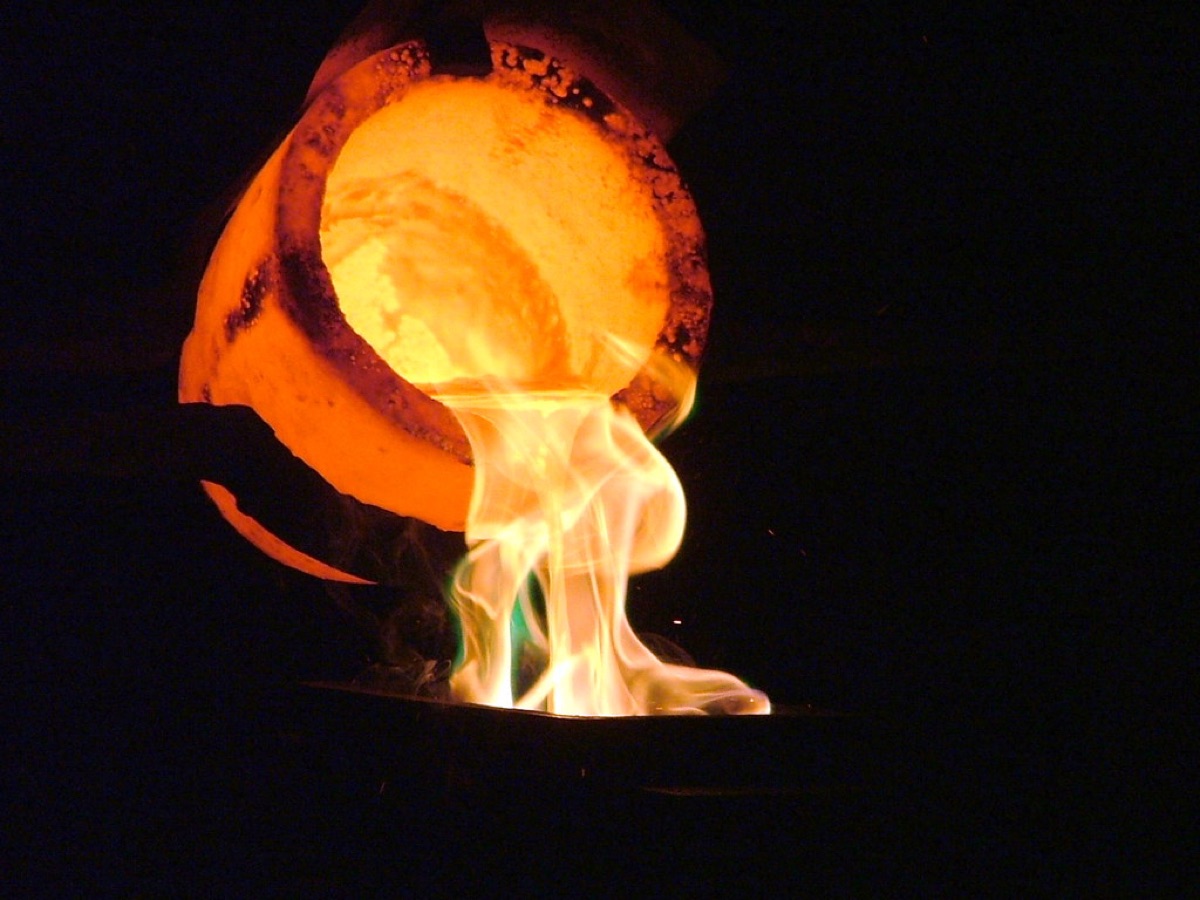
The Ephesian scrolls were burned because fire destroyed what made them dangerous: the words. You can't burn gold — fire is precisely how gold is unmade and remade. When a golden idol enters the refiner's crucible, the image, the form, the thing that was bowed to or trusted in, ceases to exist entirely. What comes out is not a cleaned-up idol. It is raw, formless metal — indistinguishable from gold mined yesterday.
This is exactly what the faithful kings of Israel did. Josiah didn't bury the idols intact — he ground them to powder (2 Kings 23:6). Moses burned the golden calf, ground it, and scattered it (Exodus 32:20). Destruction of the form is the biblical pattern, and the crucible accomplishes it completely.
“The silver is mine and the gold is mine, declares the LORD Almighty.”
Haggai 2:8
Gold is not evil. It was corrupted by what men shaped it into. Scripture's own pattern is that wealth once held in pagan hands can be consecrated to God's purposes: Israel left Egypt carrying Egyptian gold and silver (Exodus 12:35–36) — and that very plunder became the freewill offering that built the tabernacle:
“All who were willing, men and women alike, came and brought gold jewelry of all kinds: brooches, earrings, rings and ornaments. They all presented their gold as a wave offering to the LORD.”
Exodus 35:22
The warning in Deuteronomy 7:25 is against coveting idol gold and bringing the detestable thing into your house. That is precisely what this ministry exists to prevent: the item leaves your house, the form is destroyed, no one keeps or covets it — and the value is surrendered, not pocketed.
“He will sit as a refiner and purifier of silver… Then the LORD will have men who will bring offerings in righteousness.”
Malachi 3:3
What happens to the metal is what God does in us: the fire doesn't annihilate — it purifies, and what survives the fire is offered back to Him. An idol enters the crucible; an offering for the Gospel comes out. We can think of no better picture of redemption.
Some believers will pray it through and conclude their item should simply be destroyed — smashed, defaced, discarded — with no money changing hands at all. We bless that choice completely. Romans 14 applies: each one should be fully convinced in their own mind. If your conscience says destroy it yourself, destroy it yourself, and do it as an act of worship.
This ministry exists for the believer who looks at a golden idol on the shelf and feels the tension: it shouldn't stay, but throwing the Lord's gold in a landfill doesn't sit right either. For that person, the crucible answers both convictions at once — and the mission field receives the offering.
Every item we receive is prayed over in the name of Jesus — all curses, dedications, and soul ties broken — before anything else happens. Then the rule is simple: anything with an idolatrous or occult form — statues, figurines, emblems, religious objects — is always melted down. We never resell an idol intact, no matter what it would bring at sale. Items with no idolatrous form — coins, watches, jewelry from a former marriage — are sold as-is by default, since they're worth far more intact, unless you mark “destroy regardless of value” on the release form, which we honor without exception. Proceeds, less our disclosed fee of up to 20%, go to the 501(c)(3) ministry you designate.
“The Philistines had abandoned their gods there, and David gave orders to burn them in the fire.”
1 Chronicles 14:12Then release it — and let the refiner's fire finish the work.
Start the process